Invisible Aligners (Invisalign®)
Invisalign® treatment involves a series of custom trays created using advanced computer-imaging technology. These nearly invisible aligners are designed to correct mild tooth misalignment (malocclusion).
For best results, Invisalign aligners must be worn for 22 hours per day, allowing teeth to gradually shift into proper alignment. Patients switch to a new set of aligners approximately every two to four weeks as treatment progresses.
To enhance fit and movement, small composite-bonded attachments may be placed on the teeth. In some cases, interproximal reduction (IPR)—the gentle removal of small amounts of enamel between teeth—is required to create space for proper alignment.
Treatment length and the number of aligners vary depending on the severity of the case. More complex tooth movements may require additional support, such as fixed appliances or traditional braces.
While Invisalign is a popular choice—especially among adults seeking a more discreet option—traditional braces remain the most precise and effective solution, particularly for moderate to severe misalignment. Braces also allow Dr. Lupini greater control over tooth movement throughout treatment and may reduce the number of office visits needed.

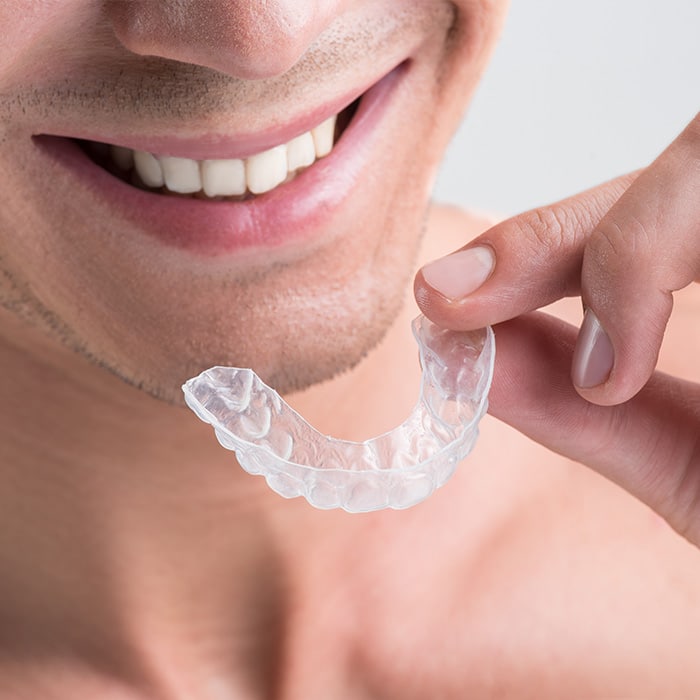
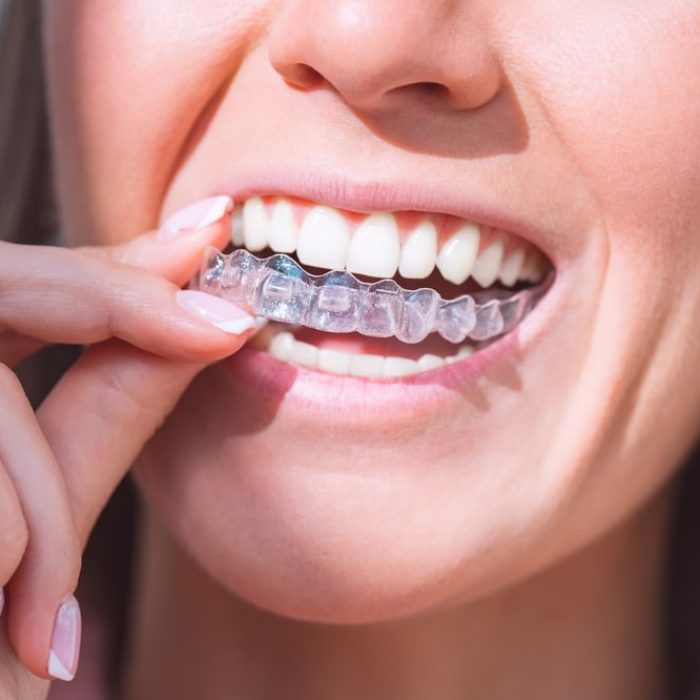
While traditional braces are often more effective for complex cases, Invisalign™ offers several advantages for patients with mild to moderate misalignment. The key differences come down to aesthetics and comfort. Traditional braces use visible metal brackets and wires, which can sometimes cause irritation. In contrast, Invisalign aligners are smooth, comfortable, and nearly invisible—making them a more discreet option.
Invisalign™ treatment also tends to involve fewer emergency visits, as there are no wires to break or brackets to loosen. While Invisalign™ may not be ideal for severe or highly complex cases, it remains an effective and popular solution for patients who want straighter teeth without the appearance of traditional braces.
Invisalign™ is an excellent choice for patients seeking a more discreet and comfortable orthodontic experience. However, it may not be suitable for everyone. If you have significant malocclusion or require complex tooth movements, traditional braces may still be the better option.
The best way to determine what’s right for you is through a personalized evaluation. Schedule a consultation with Dr. Lupini today to find out if Invisalign can help you achieve your ideal smile.